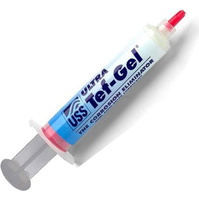
Tef-Gel has 40% Powder (PTFE and no volatile solvents, silicone oil, which would penetrate the electrolytes. When Tef-Gel is applied to the two metal surfaces in contact, the Electrolytes of sea water can no longer penetrate by capillary action, and this long periods of time. A. bolt or live in aluminium, steel, stainless steel. Use the applicator to apply a thin layer of Tef-Gel on the thread of the bolt and thread holes, and squeeze. B. Plated Surfaces Against One Another: the capillary action by applying a thin layer of Tef-Gel these areas can be protected with a brush, a toothbrush or a plastic palette before assembly. Clean the excess as white spirit. Tef-Gel is not an electrical insulation, and it does not increase the electrical resistance of connections. The PTFE (40%) is an ultra-fine powder that extrude out of the contact surface and the cavities of the surrounding surfaces. Tef-Gel eliminates the weld by corrosion of stainless steel, inconel and other Nickel Alloys. Tef-Gel applied on both nut and bolt or bolt and solid leaves a film of PTFE thread holes, which prevent the weld corrosion. As Tef-Gel contains no volatile solvents, it does not evaporate, does not freeze, will not dry out and protects durably the elements, this allows for easy removal.
- Tef-Gel is a made with a water resistant coating that prevents oxidation of metal and paste corrosion due to the flow galvaniques between different metals.
- A small amount of galvanic tef-gel is enough to prevent the exchange of electrons and corrosion that emerges between different metals and carbon materials (aluminium, stainless steel, etc.)
- Tef-Gel applied on both surfaces and bolt or nut bolt and threaded solid leaves a film of PTFE, which prevent drill steel 18/Corrosion.
- As tef-gel contains no volatile solvents, it does not evaporates and does not freeze, will not dry out and protects durably the elements, this allows for easy dismantling.
Tef-Gel zawiera 40% proszku (PTFE) i nie zawiera lotnych rozpuszczalników, oleju silikonowego, które mogyby przenikn do elektrolitów. Kiedy Tef-Gel jest nakadany na dwie stykajce si powierzchnie metalowe, elektrolity wody morskiej nie mog ju przenika przez dziaanie kapilarne i to przez dugi czas. A. ruby lub elementy pod napiciem z aluminium, stali, stali nierdzewnej. Za pomoc aplikatora naoy cienk warstw Tef-Gel na gwint ruby i otwory gwintowane, a nastpnie cisn. B. Powierzchnie platerowane wzgldem siebie: dziaanie kapilarne poprzez naoenie cienkiej warstwy Tef-Gel te obszary mog by zabezpieczone za pomoc pdzla, szczoteczki do zbów lub plastikowej palety przed montaem. Nadmiar naley oczyci benzyn lakow. Tef-Gel nie jest izolatorem elektrycznym i nie zwiksza opornoci elektrycznej pocze. PTFE (40%) jest bardzo drobnym proszkiem, który wytacza si z powierzchni styku i wgbie otaczajcych powierzchni. Tef-Gel eliminuje korozj spoin stali nierdzewnej, inconelu i innych stopów niklu. Tef-Gel naoony zarówno na nakrtk i rub lub rub i korpus pozostawia warstw PTFE w otworach gwintu, która zapobiega korozji spoiny. Poniewa Tef-Gel nie zawiera lotnych rozpuszczalników, nie paruje, nie zamarza, nie wysycha i trwale chroni elementy, co pozwala na atwe usuwanie.
- Tef-Gel jest wykonany z wodoodpornej powoki, która zapobiega utlenianiu metalu i korozji pasty spowodowanej przepywem galwanicznym midzy rónymi metalami.
- Niewielka ilo galwanicznego tef-elu wystarcza, aby zapobiec wymianie elektronów i korozji, która pojawia si midzy rónymi metalami i materiaami wglowymi (aluminium, stal nierdzewna itp.).
- Tef-el naoony na obie powierzchnie ruby lub nakrtki i gwintowanej bryy pozostawia warstw PTFE, która zapobiega korozji stali wiertniczej.
- Poniewa tef-el nie zawiera lotnych rozpuszczalników, nie paruje i nie zamarza, nie wysycha i trwale chroni elementy, co pozwala na atwy demonta.
Rok: 2026Model: TG-01Kolor: Clear